|

|
|
Issue #63 · July 10, 2026
|
This issue
• 60+ GEO data points: Brand mentions beat backlinks 3:1 for AI citations — Omnibound 2026 mega-study
• 8 metrics to track: Search Engine Land maps the new GEO measurement framework
• B2B citation benchmarks: ChatGPT cites Wikipedia (47.9%), Perplexity cites Reddit (46.7%) — opposite strategies needed
• Platform divergence: Only 11% of domains are cited by both ChatGPT and Perplexity — one strategy won't cover both
|
Brand Mentions Predict AI Citations 3× Better Than Backlinks — 60 Data Points That Prove It
2026 · Omnibound
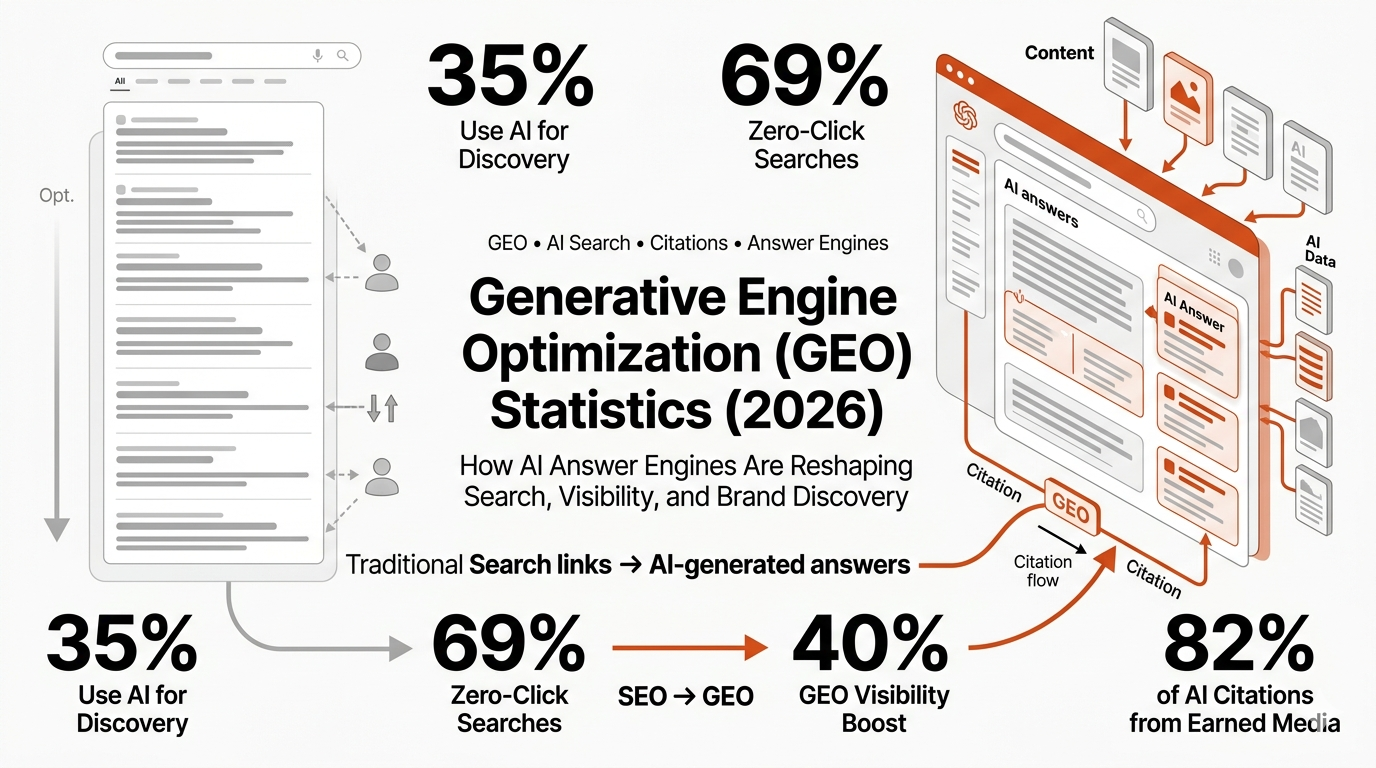
Omnibound's 60-data-point meta-study of GEO in 2026 surfaces a finding that should reshape how you allocate content budget: brand mentions correlate 0.664 with AI visibility, versus 0.218 for backlinks — a 3x gap. Backlinks drive rankings; mentions drive citations. These are now different outcomes requiring different inputs.
Other high-signal findings: pages exceeding 20,000 characters receive 4.3× more AI citations than thin content. Content updated within the past 30 days generates 3.2× higher citation rates. 82% of AI citations come from earned media, not owned domains — and distributing content broadly yields up to a 325% citation increase compared to publishing only on your own site. Meanwhile, ChatGPT-referred visitors convert at 15.9% versus 1.76% for organic search, making every AI citation worth roughly 9 organic clicks in revenue terms.
|
|
|
|
|
|
GEO Metrics · Search Engine Land
The 8 GEO Metrics That Actually Tell You If AI Search Is Working
Search Engine Land defines the new measurement framework: AI citation frequency, Share of Model Voice, answer inclusion rate, entity recognition, sentiment in AI responses, prompt coverage, content retrieval success, and conversion influence. The critical stat: when an AI summary appears, users click traditional results only 8% of the time — making citation presence the primary visibility metric, not rankings.
|
|
See the metrics ->
|
|
|
|
|
|
|
|
B2B Benchmarks · Averi
ChatGPT Cites Wikipedia (47.9%). Perplexity Cites Reddit (46.7%). Same Query, Opposite Sources.
Averi's B2B SaaS citation benchmark report reveals the engines are not just different — they're opposites. ChatGPT leans on encyclopedic authority; Perplexity leans on community validation. Google AI Overviews favor YouTube (23.3%). 73% of B2B buyers now use these tools in research, yet most brands optimize for only one. Only 11% of domains are cited by both ChatGPT and Perplexity.
|
|
Read the benchmarks ->
|
|
|
|
21K Citation Study · AuthorityTech
Pages Hitting a GEO Quality Score ≥0.70 Achieve 78% Cross-Engine Citation Rate
AuthorityTech's 21,000-citation study identifies a quality threshold that matters across platforms: pages meeting a normalized GEO quality score of ≥0.70 — based on metadata, semantic HTML, and structured data — reach a 78% cross-engine citation rate. Below that threshold, coverage drops sharply. ChatGPT requires "comprehensive reference documents with institutional authority"; Perplexity needs "comparison-focused pages with monthly freshness updates." The content that wins both is high-structure, statistic-dense, and updated at least monthly. LLM-referred traffic converts at 30-40%, versus standard organic — making each citation 17-22x more valuable per-click than a blue-link ranking.
Read the playbook ->
|
|
Navarro's Take
"The 0.664 vs 0.218 correlation gap between brand mentions and backlinks is the number SEOs need to sit with. We built an entire industry around links, but the signal AI engines actually weight is whether authoritative third parties are talking about you. That's not new — it's what PR has always done — but now it has a measurable, computable outcome in AI visibility. The brands doubling down on earned media coverage right now are building the asset that matters most in the next 18 months of search."
— Ido Navarro, GEO Pulse
|
|
|